
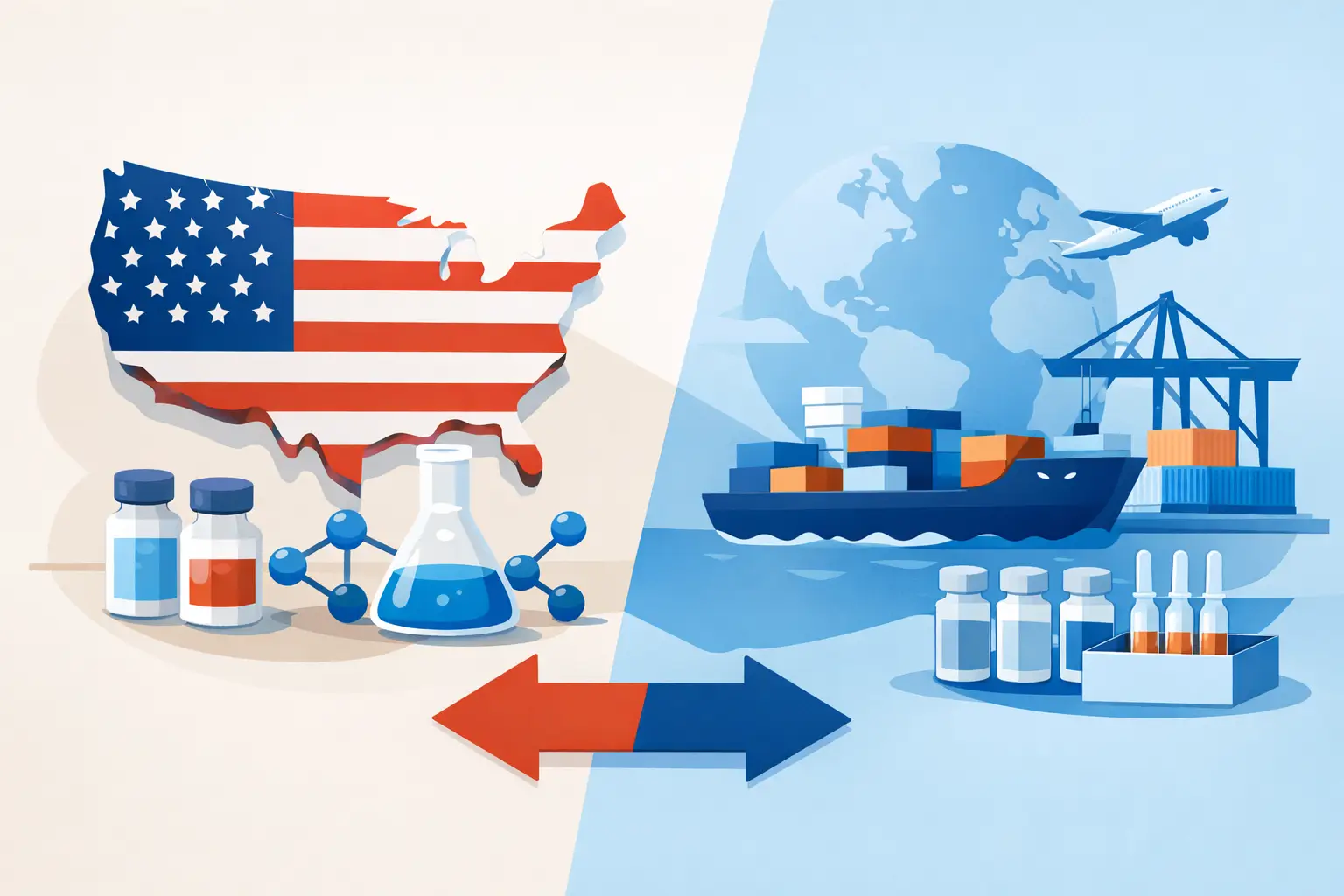
A peptide order that arrives late, warm, mislabeled, or inconsistently synthesized can disrupt more than a timeline. It can compromise research planning, waste budget, and force repeat validation work. That is why the question of us peptides vs imported matters to serious research buyers. The gap is not always visible on a product page, but it shows up quickly in documentation quality, lot consistency, fulfillment speed, and the ability to get clear answers when something needs review.
For laboratories, independent researchers, and technical buyers, the decision is rarely as simple as domestic equals good and imported equals bad. Some imported materials may appear cost-effective at first glance. But sourcing risk is cumulative. It sits in manufacturing oversight, transport conditions, customs delays, relabeling practices, and whether the supplier can actually verify what was produced and how it was handled before it reached your bench.
US peptides vs imported in real purchasing terms
The most practical difference between US peptides vs imported is operational control. A domestically produced peptide is generally easier to trace through the manufacturing and fulfillment chain. When synthesis, purification, verification, storage, and shipping happen under tighter local oversight, there are fewer blind spots between production and delivery.
Imported products often introduce more variables. The peptide may be synthesized overseas, transferred through one or more intermediaries, relabeled by a reseller, then shipped domestically with limited transparency into the original process. That does not automatically mean poor quality, but it does mean the buyer is relying on more assumptions. For research environments that value reproducibility, assumptions are expensive.
US-based production also tends to support clearer communication around process standards. If a supplier can explain its synthesis approach, purification methods, storage controls, and laboratory verification practices in direct terms, that matters. A vague certificate or generic purity claim is not the same as a supply chain that can withstand scrutiny.
Why domestic manufacturing changes risk
Peptides are precision materials. Small process deviations can affect purity, identity, stability, and consistency across lots. That makes manufacturing discipline central to the sourcing decision.
When a peptide is produced domestically under cGMP-aligned laboratory protocols, buyers generally have better reason to expect consistency in solid-phase peptide synthesis, post-synthesis cleavage, purification, and handling. Those process controls do not eliminate every variable, but they narrow the window for avoidable error. In research purchasing, narrower windows matter.
Imported supply can create distance between the buyer and the original manufacturer. That distance is not just geographic. It can be procedural. Buyers may not know whether the reported purity is tied to a specific lot, whether storage conditions were maintained during transit, or whether the product passed through multiple entities before final sale. The longer the chain, the harder it becomes to isolate the source of a problem.
This is where domestic sourcing often justifies a premium. You are not paying only for the vial. You are paying for tighter process visibility, fewer handoffs, and better odds that what was ordered is what was synthesized, verified, packed, and shipped.
Testing and documentation are where claims get real
A technically informed buyer should look past marketing language and focus on evidence. Laboratory verification, batch documentation, and process transparency separate a professional supplier from a commodity seller.
With US-produced peptides, documentation is often easier to evaluate because the supplier is closer to the production environment and more accountable for the records tied to it. If a question comes up about analytical testing, identity confirmation, or lot-specific consistency, a domestic supplier is in a stronger position to respond directly and quickly.
Imported products can still carry certificates and test claims, but the key issue is confidence in chain-of-custody and record integrity. If the reseller did not oversee production, then its ability to answer detailed technical questions may be limited. In practice, that leaves the buyer with paperwork but not always with clarity.
Shipping, storage, and time in transit
Peptide quality is not only a manufacturing issue. Shipping exposure matters. The longer a product spends in transit, the more opportunity there is for temperature variation, customs holds, packaging stress, and delays that are outside the seller’s direct control.
This is one of the most overlooked parts of the us peptides vs imported discussion. Imported product may have acceptable specifications at origin, yet still face additional risk before final delivery. Extended transit windows can complicate storage integrity, especially if packaging or environmental controls are inconsistent.
By contrast, domestic fulfillment compresses the timeline from warehouse to customer. Faster shipment does not merely improve convenience. It reduces handling events and limits the number of variables introduced after verification. For research buyers who need materials on schedule, that operational reliability has measurable value.
Same-day processing and expedited domestic delivery can also support planning discipline. If your workflow depends on confirmed inventory and predictable arrival, shorter fulfillment cycles lower uncertainty. That benefit is difficult to quantify on a price sheet, but it becomes obvious when a project is waiting on materials.
Price matters, but total cost matters more
Imported peptides often compete on headline price. For buyers under budget pressure, that can be tempting. But unit cost is only one part of the purchasing equation.
If a lower-cost imported product arrives late, requires additional verification, varies lot to lot, or raises documentation questions that delay use in a research setting, the real cost increases quickly. Time spent resolving quality concerns, replacing material, or repeating analytical work can outweigh the initial savings.
Domestic peptides typically position themselves at a premium because the supplier is carrying more of the burden upfront – manufacturing oversight, verification discipline, warehousing control, customer support, and faster domestic logistics. For many research buyers, that is a rational trade-off. Paying more for higher confidence is often cheaper than paying less for uncertainty.
That said, the right choice still depends on the application. If a buyer is making a low-stakes purchase where timing, support, and lot consistency are less critical, imported material may appear acceptable. But where repeatability, documentation, and operational speed matter, domestic sourcing usually offers a stronger risk-adjusted value.
Compliance and accountability
Professional peptide sourcing requires more than product availability. It requires a supplier that communicates clearly about intended use, handling, and regulatory boundaries. This is another area where domestic suppliers often stand apart.
A serious US-based company is more likely to use explicit research-use-only language, maintain disciplined product positioning, and provide responsive customer support grounded in those boundaries. That level of clarity protects both the supplier and the buyer. It also signals maturity in how the business operates.
Imported or loosely managed reseller channels may be less precise in how they describe products or less accessible when clarification is needed. For technically informed buyers, that is a red flag. If a supplier is casual about compliance language, it may also be casual about manufacturing controls and documentation practices.
Accountability matters when issues arise. A domestic supplier with US-based customer support can usually resolve shipping questions, order discrepancies, or documentation requests faster than a reseller operating through fragmented channels. In a research setting, responsiveness is not a luxury. It is part of supply reliability.
How experienced buyers should evaluate the choice
The best way to assess domestic versus imported peptides is to evaluate the full supply path, not just the label on the vial. Ask where the material was manufactured, how it was synthesized and purified, what verification standards were used, how quickly it ships, and whether support can answer technical questions without evasiveness.
Also consider consistency over time. A supplier that can deliver one acceptable order but cannot maintain standards across future lots is not solving the real sourcing problem. Reliable procurement depends on repeatable quality and repeatable service.
This is where a domestic, laboratory-focused supplier can create real advantage. Companies such as Elitegen Labs build their value around US-based manufacturing oversight, laboratory verification, fast fulfillment, and accessible support because those are the factors that reduce uncertainty for the buyer. That model is not designed for commodity shopping. It is designed for research customers who want fewer unknowns in the procurement process.
A lower price can be attractive. A lower-risk supply chain is usually more useful. When the material is intended strictly for research, analytical, and development purposes, the smarter purchase is often the one that gives you better traceability, better communication, and fewer surprises after checkout.
The right supplier should make your next step easier, not force you to question what happened before the package arrived.
Leave a Reply